QuickPic AAC
com.quickpic
View detailed information for QuickPic AAC — ratings, download counts, screenshots, pricing and developer details. See integrated SDKs and related technical data.
- No items.

Screenshots
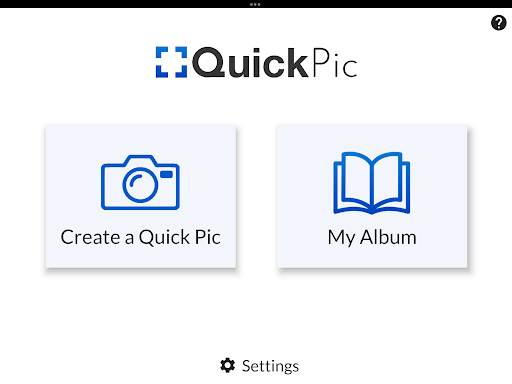
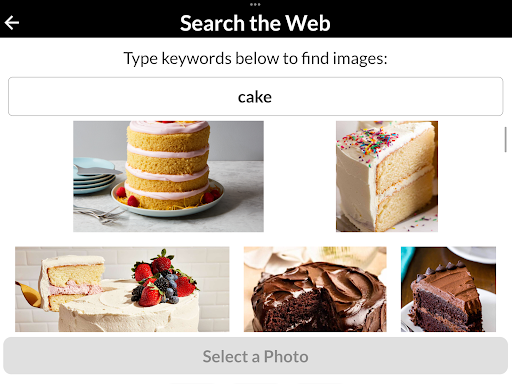
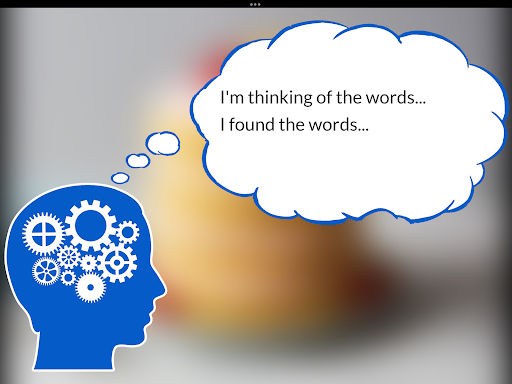

Description
Powered by AI, QuickPic creates topic-specific displays automatically from photographs to support communication and language learning for non-speaking individuals, their families, and speech-language pathologists (SLPs).
Choose a photograph, and in a few seconds QuickPic will create a topic-specific display containing vocabulary symbols (pictograms) related to the input photograph!
Topic-specific displays are a single page containing all relevant vocabulary to discuss a certain topic or activity. Users can then select vocabulary to create sentences using synthesized speech.
QuickPic is fully customizable:
~> You can edit the topic display created to add or remove words, or select a better symbol for a specific word.
~> You can change the size of all elements in the interface.
~> You can choose the complexity of vocabulary generated automatically.
~> You can program familiar people to enable QuickPic to automatically recognize them when creating new boards.
QuickPic was designed by a team of experts (PhDs and CCC-SLPs) in the field of speech-language therapy and human-computer interaction (HCI) using user-centered design methodologies, which involved the participation of end-users in the process.
*** Development of this application was partly supported by the App Factory to Support Health and Function of People with Disabilities funded by a grant from the National Institute on Disability, Independent Living and Rehabilitation Research (NIDILRR) in the U.S. Department of Health and Human Services to the Shepherd Center (Grant # 90DPHF0004) ***
Created by Mauricio Fontana de Vargas (PhD), Howard Shane (PhD), and Christina Yu (CCC-SLP).